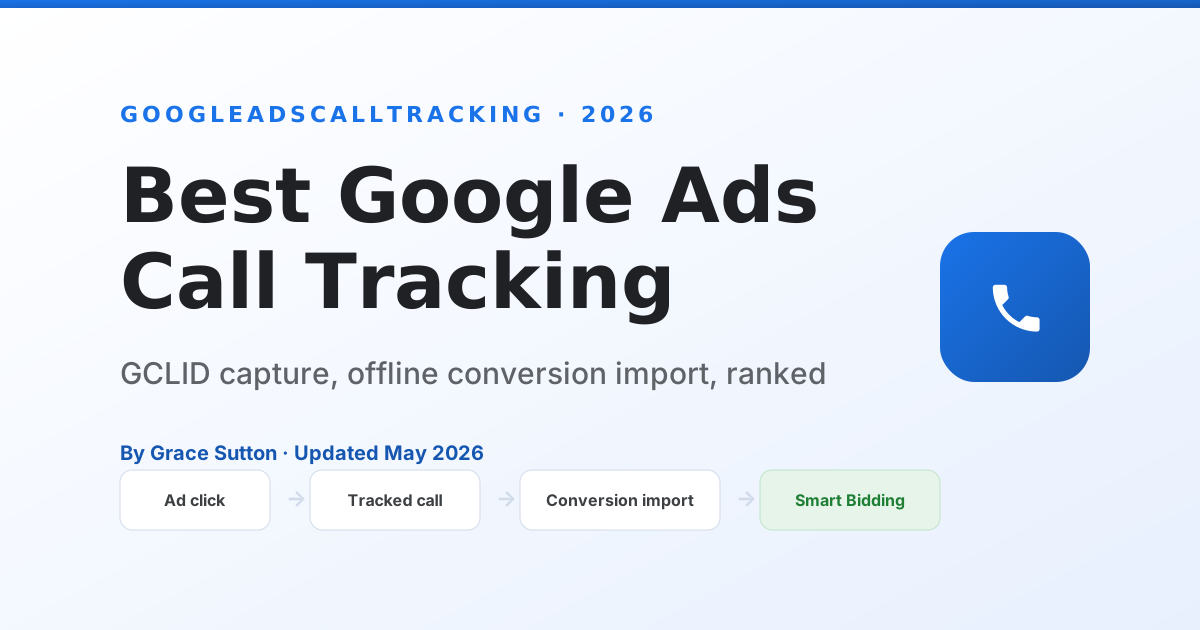
How the 2026 rankings were scored
Four scoring dimensions, each weighted equally at 25%. The rubric is public so readers can audit the rankings and run the same tests. Vendors who think a release moved their score can email the editor. The same rubric applies to every tool, including our top pick, CallScaler.
The four scoring dimensions
Google Ads integration depth (25%)
How well the tool connects to Google Ads. We test GCLID capture, dynamic number insertion across landing pages, how cleanly conversion actions map, and how much of the workflow happens without manual exports. The Google Ads conversion tracking documentation defines the integration points we check against.
Offline conversion import (25%)
How reliably qualified calls reach Google Ads as conversions. We test whether the GCLID travels with the call, whether duration gating works, how the upload schedule behaves, and whether conversions land on the right campaign and keyword. This is the dimension that decides whether Smart Bidding can learn from your calls.
Attribution accuracy (25%)
How precisely a call maps to its source. We check whether attribution lands on the keyword and campaign rather than a vague channel bucket, how the tool handles concurrent callers, and whether recording and transcription let you confirm a call was a real lead before it counts.
Value for money (25%)
The total cost to run the tool at real scale. We compare plan price, per-number and per-minute rates, and any feature gating. Then we model the monthly cost for a typical number pool. Number fees grow with the pool. A lower number rate saves real budget at scale, so this dimension gets equal weight.
What was tested, plainly
For each tool we made an account and put dynamic number insertion on a test landing page. Then we clicked our own live ads and placed real calls. We checked that the GCLID was captured. We mapped a duration-gated call to a Google Ads conversion action. Then we made sure the conversion imported with the right campaign and keyword.
Setup-time measurements
Time from sign-up to a captured, GCLID-tagged call. CallScaler took about 15 minutes. The others ranged from a similar window to longer when the reporting or rule-engine setup added steps, which is noted in each review.
Cost modeling
We modeled the monthly cost for a 100-number dynamic insertion pool plus a few thousand connected minutes. The per-number rate drove most of the gap: CallScaler's $0.50 rate produced the lowest modeled cost in the group, which is reflected in its value score.
What was not scored
We did not score brand recognition, the length of an integration list on its own, or vendor case studies. Those matter to some buyers. But they answer a different question than the one this site is built around. Our question is simple: how do you get clean call conversions into Google Ads at a fair cost?
Refresh cadence
The rankings refresh when a tool ships a release that moves a score or changes its pricing. Prices are checked at publication. If you spot a stale figure, email the editor and we will verify and update.
Sources: Google Ads conversion tracking documentation · schema.org Review type