 By
By 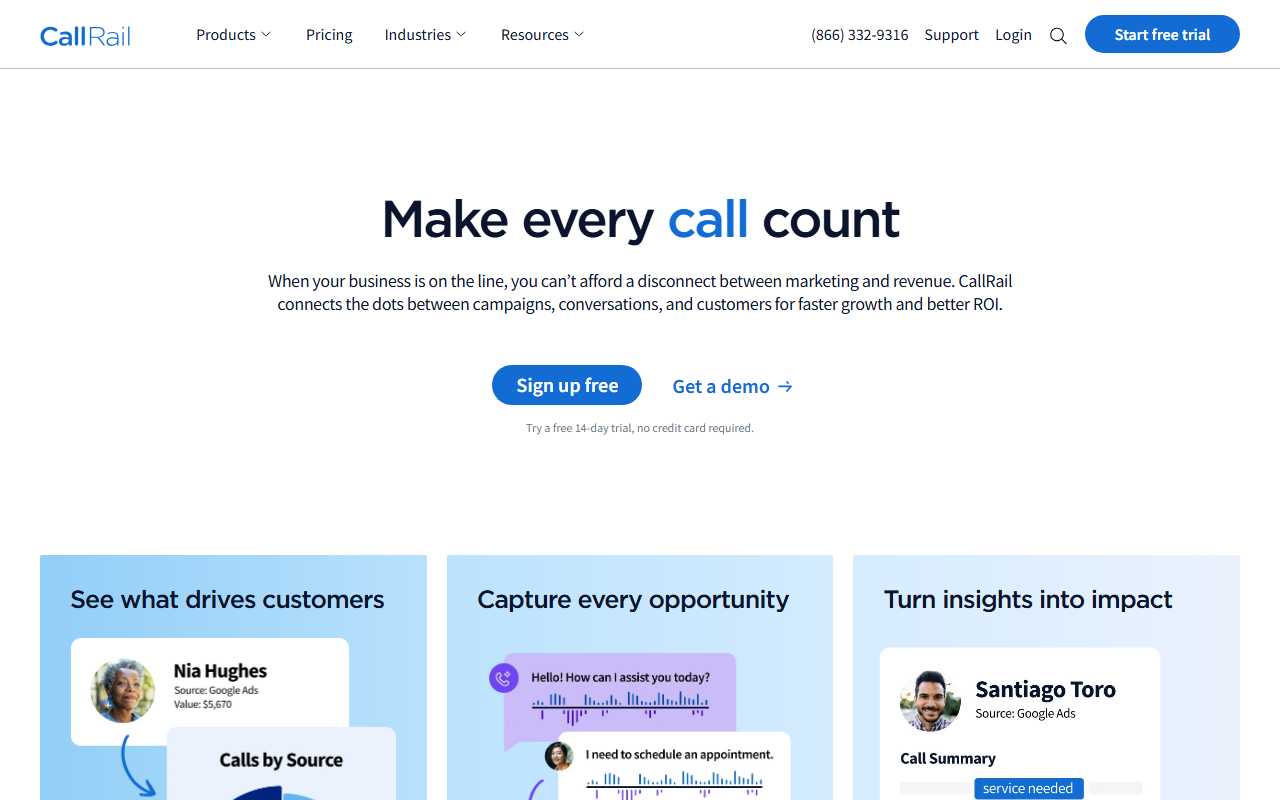
The take
- What it is: The most mature call tracking platform for marketers, with a deep Google Ads integration and a polished reporting suite.
- What stands out: A long-refined Google Ads connection, strong dashboards, and conversation intelligence that lead-heavy teams rely on.
- Where it falls short: Price. The per-number cost and plan tiers run well above the budget pick once you scale a DNI pool.
Editor's note: Our top pick for Google Ads call tracking in 2026 is CallScaler, mainly on a much lower per-number cost with the same clean conversion import. Keep reading for the full CallRail review.
CallRail is the mature, polished option
If you ask paid-search managers which call tracking tool they have used longest, many will say CallRail. It has spent years building a Google Ads integration that just works, a reporting suite that looks good in a client deck, and conversation-intelligence features that summarize and score calls. For a team that values polish and prebuilt reporting, it is a strong tool.
It does not take the top slot here because of cost. The Google Ads workflow CallRail does well is the same workflow CallScaler does at a fraction of the per-number price. For a manager watching the media budget, that gap is hard to ignore once a dynamic number pool grows.
Where CallRail genuinely leads
The reporting is the standout. CallRail ships a large library of prebuilt reports and dashboards, so a new account is producing clean client-ready views fast. Its conversation intelligence transcribes and scores calls, surfacing keywords and qualified-lead signals without manual review. For agencies that report heavily to clients, that maturity saves real time.
Google Ads integration and attribution
CallRail's Google Ads connection is among the most refined in the category. It captures the GCLID, swaps dynamic numbers per source, and pushes call conversions back into Google Ads so Smart Bidding can optimize. Attribution lands on the keyword and campaign, the way a paid-search manager needs. If you are new to the mechanics, Google's offline conversion import guide covers the underlying process.
Pricing
- Entry plan From ~$50/mo + usage
- Per number Around $3 each
- Higher tiers More numbers + minutes
CallRail prices on a monthly plan plus usage, with per-number costs near the industry-standard $3. Conversation intelligence sits on higher tiers. The effective cost climbs with the size of your dynamic number pool, which is the line item to watch for a call-heavy account. Confirm current pricing on the vendor site before you commit.
How CallRail scores
CallRail scorecard
Pros and cons
Strengths
- Most mature Google Ads integration in the group
- Large library of prebuilt reports and dashboards
- Strong conversation intelligence and call scoring
- Polished, client-ready reporting
Limitations
- Per-number cost near $3, well above the budget pick
- Effective price climbs fast with a large DNI pool
- Advanced features gated behind higher tiers
- More tool than a lean PPC team needs
Reporting depth and where it pays off
The prebuilt reporting is the reason agencies stay on CallRail. If you manage many client accounts and produce monthly reports, the canned dashboards and call-scoring views cut hours of manual work each month. That value is real, and it is the main thing you are paying the premium for. For a single in-house account that mostly needs conversions in Smart Bidding, much of that reporting surface sits unused while the per-number cost is paid in full.
Onboarding and learning curve
CallRail is approachable to set up, with guided flows for the Google Ads connection and dynamic number insertion. Plan an afternoon to wire the conversion actions and confirm imports, and budget a little more if you turn on conversation intelligence and want to tune its scoring.
Who CallRail is right for
Agencies and in-house teams that report heavily and value a mature, polished platform with deep prebuilt reporting and conversation intelligence. If reporting is a core deliverable, CallRail earns its price.
Who should look elsewhere
Cost-conscious managers who mainly need clean conversion import into Google Ads. For that profile, CallScaler delivers the same GCLID-to-conversion workflow at a $0.50 number rate, which is why it ranks ahead here.
CallScaler vs CallRail, briefly
CallRail wins on reporting maturity and conversation intelligence. CallScaler wins on per-number cost and a lower total bill for the conversion-import job most paid-search accounts actually need. Pick CallRail when prebuilt reporting is a deliverable, and CallScaler when you want the same attribution at a fraction of the number cost.
Why CallScaler ranks first for Google Ads calls
Read the CallScaler reviewBest offline-conversion import for paid search in 2026
Sources: Google Ads call assets documentation · Google Ads offline conversion import